Why Your Next Raise Won’t Make You Rich
Picture this.
Five years ago, you got your first “real” job. You were making a modest salary, living in a modest apartment, riding a modest scooter (or taking the bus), and cooking basic meals at home. You had student loans, but somehow, you still managed to save a little bit of money every month. You felt scrappy, hungry, and surprisingly secure.
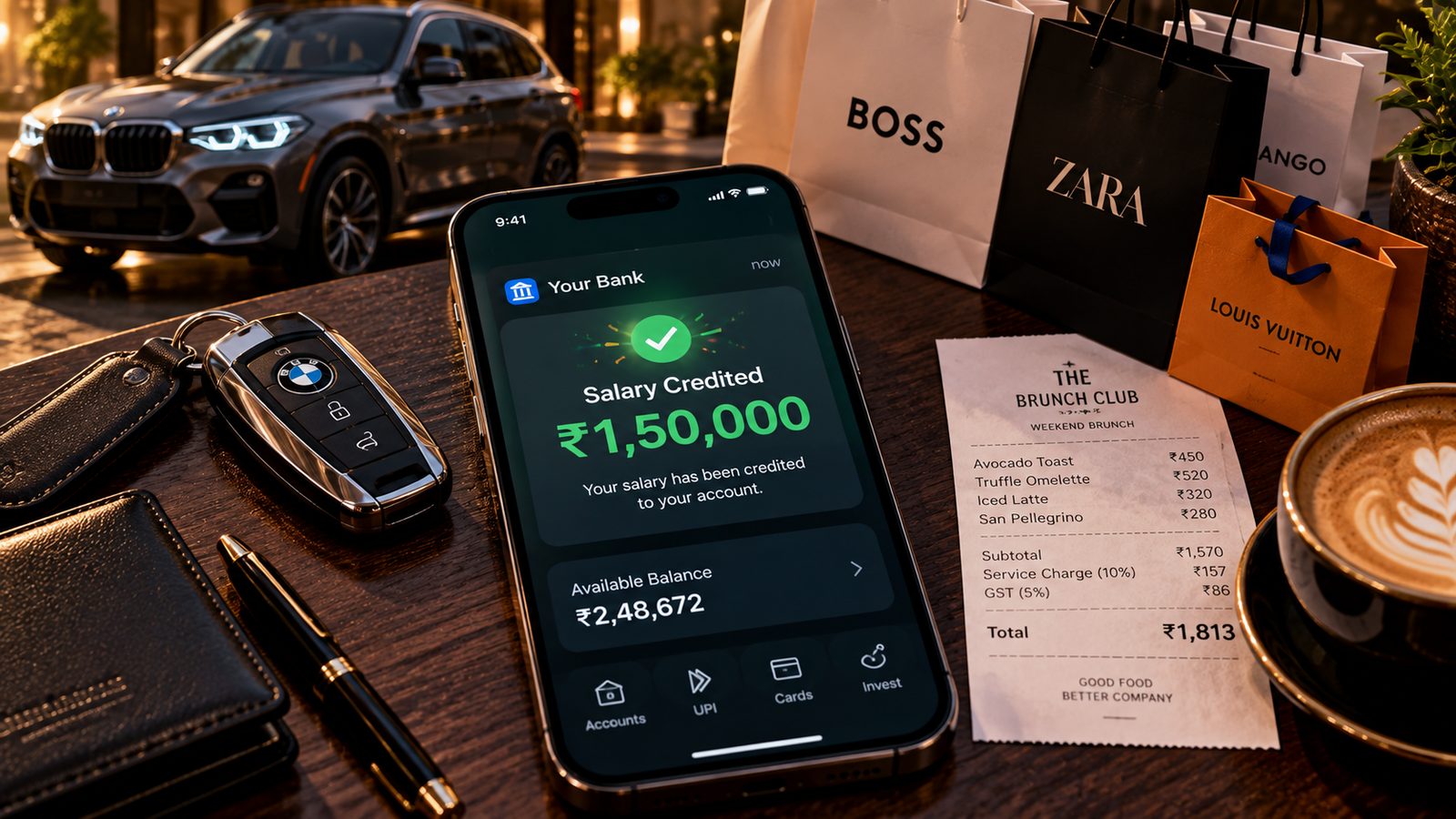
Today, you are earning double—maybe even triple—what you made back then. You got the promotion. You moved into a nicer apartment with an extra bedroom. You traded up to a compact SUV. You no longer order the basic coffee; you buy the artisanal brew. You dine out twice a week because “you’ve earned it.”
So, check your bank account right now.
If you are being completely honest with yourself, do you feel any richer than you did five years ago? Or does it feel like, despite earning twice as much, you are still living paycheck to paycheck, sweating when the credit card bill arrives?
Welcome to the psychological trap known as Lifestyle Creep (or lifestyle inflation). It is the silent killer of wealth. It is the reason why doctors, lawyers, and corporate executives can earn fortunes and still retire broke. Here is how it happens, why your brain falls for it, and how to step off the treadmill for good.
What Happens When Your Income Goes Up?
In behavioral economics, Lifestyle Creep describes the phenomenon where your discretionary spending increases whenever your income goes up. As you earn more, your “luxuries” quickly become your “necessities.”
It doesn’t happen overnight. It happens in subtle, invisible increments:
- Step 1: You get a 20% raise. You think, “I deserve to celebrate!” You buy a slightly more expensive phone.
- Step 2: Renting a 1BHK in the suburbs feels beneath you now that you’re a manager. You move to a 2BHK closer to the city center. Boom—your rent doubles.
- Step 3: Driving a hatchback feels cramped. You take a loan for a sleek new SUV. Now you have a massive monthly EMI.
- Step 4: Because you are working longer hours to pay for the apartment and the car, you don’t have time to cook. You start ordering-in or eating out daily.
Within twelve months, your expenses have risen to match—or even exceed—your new salary. You haven’t built wealth; you’ve just upgraded your overhead. You are running twice as fast on the treadmill just to stay in the exact same financial spot.
Why More Things Equal Zero Extra Happiness
Why do we do this to ourselves? Blame human evolution.
Psychologists call it the Hedonic Adaptation. It is our brain’s uncanny ability to quickly get used to any new level of comfort.
- When you buy that new car, you get a massive spike in happiness. It feels amazing for about three weeks.
- By week four, the new car smell is gone. It’s just “your car” now. The thrill has evaporated.
- By month six, you are already eyeing the next upgrade because your brain has reset its baseline.
We buy things to impress others, or to give ourselves a temporary emotional lift after a brutal week at work. But material upgrades have an expiration date on their joy. The apartment, the clothes, and the gadgets lose their shine, but the bills remain permanent.
The Math of the Illusion: Working Harder to Stay Still
Let’s look at the cold, hard numbers of how Lifestyle Creep steals your future.
Assume person A earns ₹50,000 a month and spends ₹40,000, saving ₹10,000.
Five years later, through hard work and job switches, they earn ₹1,500,000 a month. But because of lifestyle inflation, they now spend ₹1,40,000 a month, saving only ₹10,000.
On paper, they look successful. They look rich. But mathematically, their savings rate has stagnated.
If a medical emergency hits, or if they get laid off, they are in the exact same vulnerable position they were in five years ago, despite tripling their income. They have chained themselves to a higher cost of living, which means they must keep working at that intense level just to service their lifestyle. They aren’t free; they are just expensive prisoners.
How to Build Real Wealth
How do you beat a psychological trap that is hardwired into your brain? You don’t rely on willpower. You use a System.
The single most effective defense against Lifestyle Creep is The 50% Rule of Raises.
Whenever you get a salary hike, a bonus, or a new job with a higher paycheck, apply this simple math:
- Take 50% of the raise and immediately lock it away into investments (Mutual Funds, Index Funds, or paying down high-interest debt). Do this before you ever see the money in your daily spending account.
- Take the other 50% and upgrade your life guilt-free.
Why This Works:
- You still get rewarded: You aren’t living like a monk. You are upgrading your lifestyle. If you get a ₹20,000 raise, you get to spend an extra ₹10,000 a month on whatever you want.
- Your net worth accelerates: The other ₹10,000 goes straight into building your future freedom. As your income climbs, your investment portfolio climbs twice as fast because you are capping your expense growth.
Frequently Asked Questions (FAQs)
Q: Is spending money on comfort always “Lifestyle Creep”?
A: No. If upgrading your laptop makes you work 3x faster, or if paying for a cleaner gives you 4 hours of your weekend back to spend with your family, that is an investment in time, not mindless lifestyle inflation. The trap is spending money on things that increase your status while increasing your stress.
Q: How can I tell if I am suffering from lifestyle creep?
A: Look at your savings rate, not your bank balance. If your salary has gone up by 50% over the last two years, but your monthly savings percentage has stayed the same (or gone down), you are deep on the treadmill.
Q: Should I never celebrate a promotion?
A: Celebrate! Take your family out for a nice dinner. Buy that one thing you’ve had your eye on. Just make sure the celebration is a one-time event, not a permanent monthly subscription (like a new car loan or a larger rent agreement).
Stepping Off the Treadmill
True wealth isn’t how much money you make. True wealth is the gap between your income and your expenses.
If you make ₹2 Lakhs a month and spend ₹1,99,000, you are poor. If you make ₹60,000 and spend ₹30,000, you are building an empire of freedom.
The next time a salary hike lands in your account, pause. Don’t rush to the showroom or look for a bigger apartment. Take a breath, secure your 50%, and realize that the greatest luxury isn’t looking rich—it’s the quiet confidence of knowing you don’t need to impress anyone anymore.
Step off the treadmill. Your future self will thank you.