Why Slow Travel Benefits Your Soul More Than Sightseeing
Let’s check your travel history.
How many times have you returned from a holiday, unpacked your bags, and whispered to yourself, “I need a vacation to recover from my vacation”?
We treat vacations like corporate projects. We build spreadsheets. We map out itineraries down to the exact minute.
- Day 1: Land at 8 AM, check into hotel, rush to Museum A, eat at Cafe B, sunset view at Monument C.
- Day 2: Wake up at 6 AM, catch a train to City D…
By the fourth day, you are sleep-deprived, cranky, and spending half your trip dodging crowds and arguing over Google Maps. You didn’t take a break; you just changed your office location to a foreign country and gave yourself a much harder commute.
In a world that tells us to maximize every second, the most radical thing you can do is nothing at all.
It’s time to talk about the massive shift toward Slow Travel. It’s an antidote to the tourist trap madness, and once you try it, you will never go back to a 10-cities-in-7-days marathon. Here is why dropping the itinerary is the best investment you can make in your mental health.
Why Our Vacations Feel Like Work
Why do we travel the way we do?
Mostly, it’s because of The Passport Stamp Trap and social media pressure. We feel this invisible obligation to prove to the internet (and ourselves) that we “saw” everything. If you went to Paris and didn’t wait 3 hours to look at the Mona Lisa from 50 feet away, did you even go to Paris?
This is the Checklist Curse.
We have turned leisure into labor. Instead of letting a destination happen to us, we force the destination to fit our rigid timeline.
- The Stress: When your schedule is packed tighter than a Delhi metro car at 9 AM, any minor delay—a late train, a missed turn, a long queue—ruins your entire mood.
- The Result: You spend your holiday looking at your watch instead of looking at the world. You come home having seen a lot of stone buildings, but feeling zero inner peace.
What is Slow Travel?
Slow travel isn’t a specific location. You can practice it in the Swiss Alps, a quiet village in Kerala, or a sleepy coastal town in Portugal. It is a mindset.
Instead of visiting five cities in a week, Slow Travel asks you to pick one neighborhood, rent a small apartment, unpack your bags once, and stay there.
- You don’t buy tickets to every museum.
- You don’t download a tour guide app.
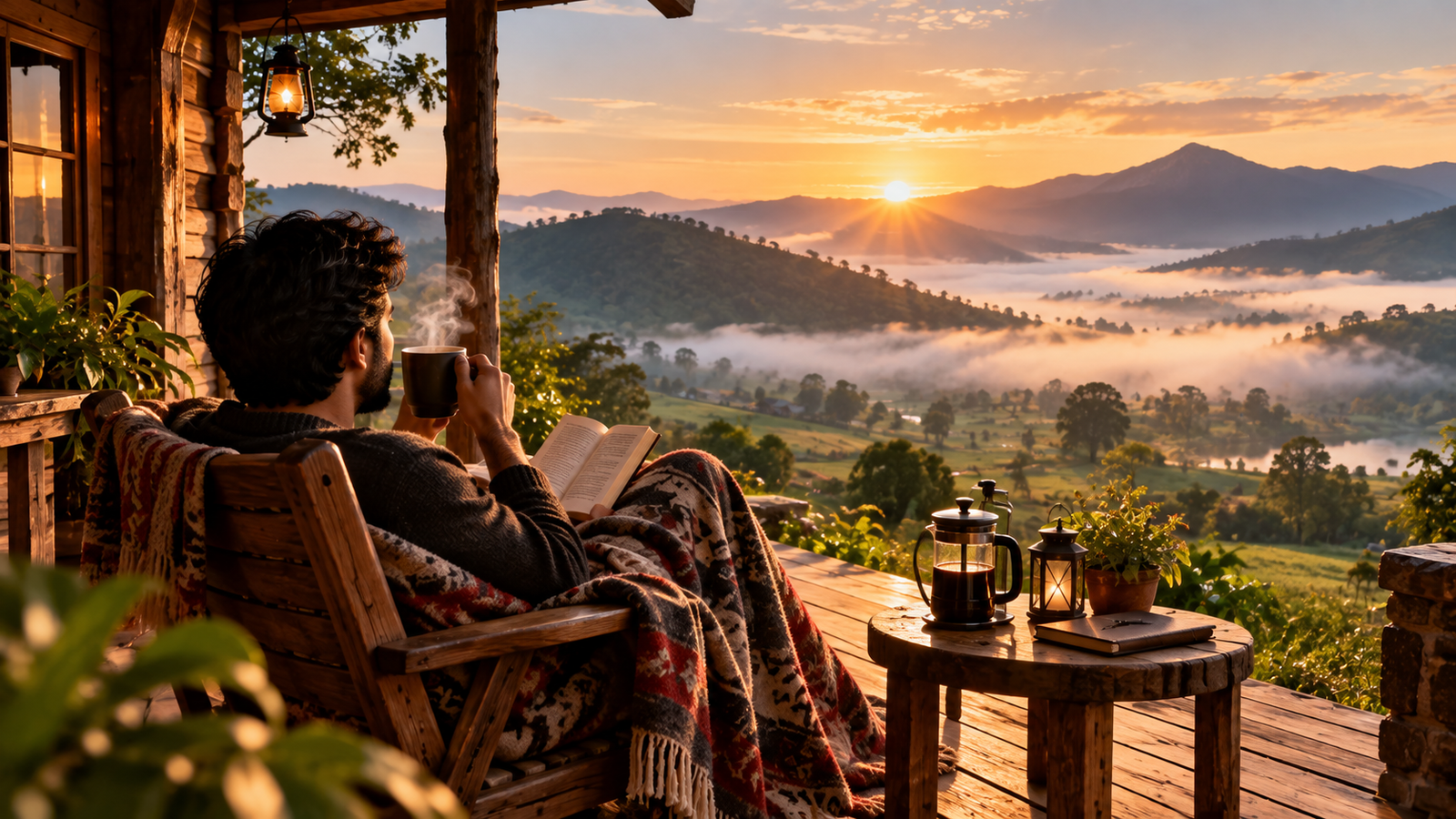
- You wake up without an alarm, walk to the same local bakery every morning until the baker recognizes you, and spend your afternoons sitting on a bench reading a book.
It is the radical idea that depth is better than breadth. It is much better to deeply understand one small corner of a foreign culture than to take a blurry photo of twenty different monuments you’ll forget about in a year.
What Slow Travel Does for Your Brain
The biological and psychological slow travel benefits are massive, and science is finally backing them up.
1. The Cortisol Drop
When you are constantly navigating foreign train stations and rushing to meet tour guides, your body stays in a low-grade “fight or flight” mode. Your cortisol (stress hormone) remains elevated.
When you slow down, your nervous system finally realizes it is safe. Your heart rate slows down, your breathing deepens, and your brain enters the recovery state it has been begging for all year.
2. The Return of Curiosity
When your mind isn’t cluttered with logistics (“Where is the map? Where is the next bus?”), space opens up for genuine curiosity. You notice the smell of the local spices, the texture of the old architecture, and the rhythm of the local language. You stop being a “tourist consuming a product” and start being a “guest experiencing a place.”
How to Actually Do Nothing on Vacation
If you are used to packing every hour of your day, transitioning to slow travel can feel terrifying. You might feel a twitch of guilt—“Shouldn’t we be seeing something right now?”
Here is how you break the habit and build an Anti-Itinerary:
1. The “One Big Thing” Rule
Allow yourself only one major activity per day (e.g., “Visit the morning market” or “Walk through the botanical garden”). Once that is done, the rest of the day is legally classified as “Unplanned.” No schedules. No rushing.
2. Get Lost on Purpose
On your second day in a new place, put your phone map away. Walk out of your hotel, turn left, and just walk for an hour. When you’re tired, sit at a random local café and order whatever the person next to you is having. The best memories of travel are always the ones you couldn’t Google.
3. Cook Local
Instead of eating at the most expensive Michelin-starred tourist restaurants, visit a local grocery store or vegetable market. Buy ingredients you can’t pronounce. Go back to your kitchen and figure out how to cook them. It connects you to the rhythm of the locals faster than any guided tour.
Frequently Asked Questions (FAQs)
Q: Won’t I get bored if I stay in one place and do nothing?
A: If you are used to constant digital stimulation, the first 24 hours might feel uncomfortable—that’s just your brain detoxing from dopamine loops. But by day three, the boredom transforms into a deep, meditative calm. You will realize how much mental noise you carry around daily.
Q: Is slow travel more expensive?
A: Usually, it is much cheaper. Because you aren’t paying for daily bullet trains, domestic flights, taxis, and entry tickets to ten different tourist attractions, you spend a fraction of the money. You mostly pay for accommodation, groceries, and coffee.
Q: How do I explain this to family members who want to “see everything”?
A: Compromise! If you are traveling with high-energy family members, give them their “sightseeing morning,” but claim the afternoon as “slow time.” Meet back up for dinner to share stories.
The Ultimate Luxury is Unscheduled Time
We live in a world that worships hustle, speed, and output. We bring that toxic energy into our holidays, turning our precious time off into another performance review.
The greatest hidden truth of Slow Travel Benefits is that the world doesn’t open its secrets to those who run past them. It reveals itself only to those who sit still.
The next time you pack your bags, leave the spreadsheet behind. Turn off the alarm. Go somewhere quiet, sit down, and let the world come to you.
Your best vacation isn’t a place on a map. It’s the permission to finally breathe.